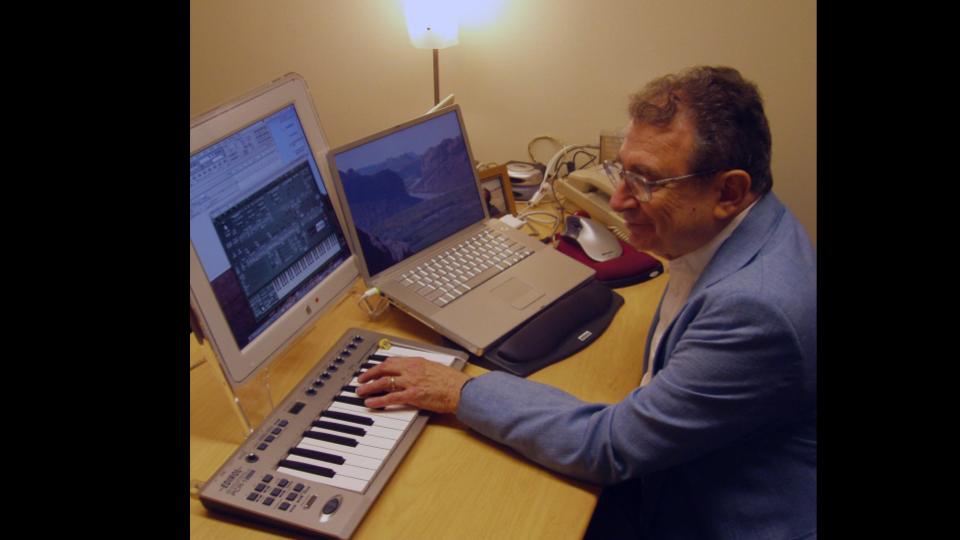
Alan R. Pearlman
As many of you know, our brand is built upon the invention of the great Alan R. Pearlman. Our mission is to keep his legacy alive and allow synthesizer lovers to enjoy iconic instruments such as the ARP 2600 and the ARP Sequencer.
While researching online, we realized how little information there is about Alan R. Pearlman’s personal life. Most of what’s written focuses on the synthesizers he created, but very little is said about the man himself. For this reason, we reached out to Dina Pearlman-Ifil, who kindly shared with us some previously unpublished information that we are thrilled to share with you today. Thank you so much, Dina!
Who Was Alan R. Pearlman?
Describing the greatness of a human being in words is always difficult—especially when it comes to someone like Alan. But I will do my best to honor him.
Alan was an American engineer born in 1925, best known as the founder of ARP Synthesizers. Yet, in truth, he was much more than that.
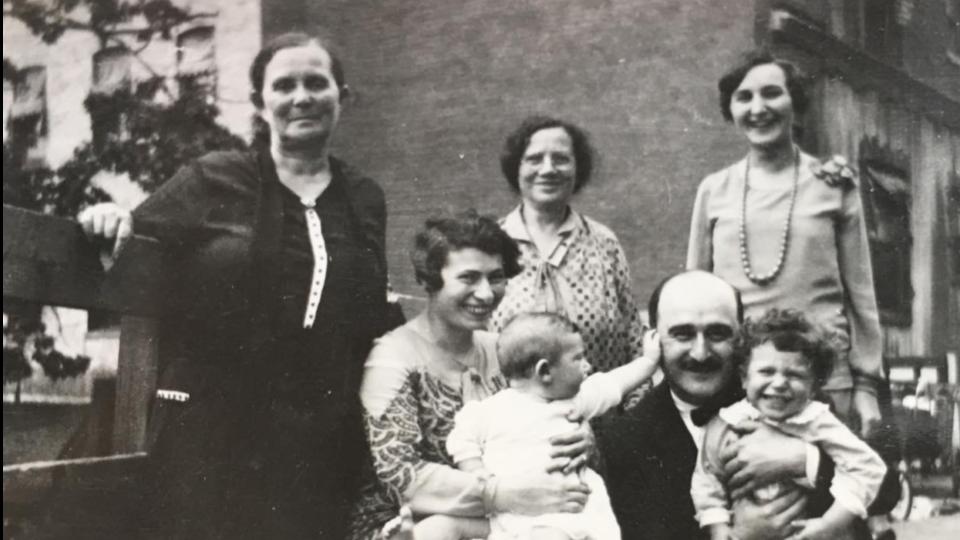
He was the son of Ada and Julius Pearlman, both of Eastern European descent. His parents were first-generation Americans whose own parents had fled Russia and Lithuania due to antisemitism, eventually settling in Washington Heights and the Bronx, New York City.
Julius was an electromechanical designer who worked for a company called International Projectors and even held patents for movie projectors. Ada devoted herself to raising Alan and his brother Donald. However, when Alan was only four years old, his parents divorced, and Ada and the boys went to live with Ada’s parents.
Passion, it seems, can be inherited. Inspired by his father’s work, Alan developed an early fascination with electricity—so much so that he once received quite a shock experimenting with it. This curiosity led him to build amateur radios, showcasing a remarkable technical talent from a very young age. Both Alan and his brother were exceptionally intelligent.
During his teenage years, Alan also discovered a love for music and the piano. Julius passed away after Alan was in college, but he studied with Syliva Levinson while he was still in high school. He found great joy in studying and performing classical piano pieces.
After high school, Alan joined the military service. When his service ended, he enrolled at the Worcester Polytechnic Institute in Massachusetts. In 1948, for his senior thesis, he designed a vacuum tube envelope follower, a circuit capable of extracting the amplitude envelope of a sound.
Family Life and the Birth of ARP
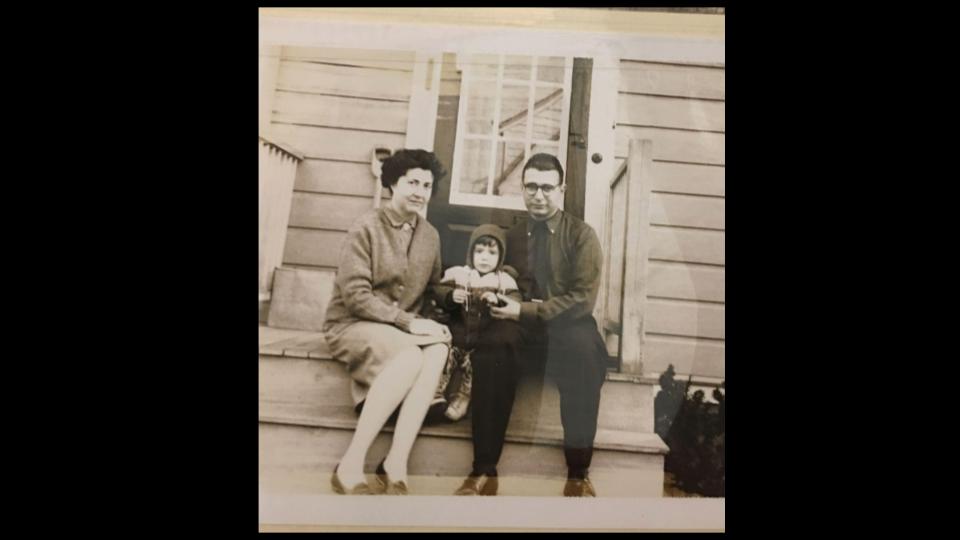
In the mid-1950s, Alan met the love of his life, Buena Alacay. By one of those coincidences—or perhaps destinies—they fell deeply in love and were married just six months later. Buena became the anchor for Alan’s inventive spirit. Four years later, their only daughter, Dina, was born into a home filled with love and music.
Up to that point, Alan had worked for various companies as an electrical engineer, earning patents and even collaborating with NASA. He started his own company Nexus, that eventually he sold to Teledyne, which gave him the financial freedom to start anew.
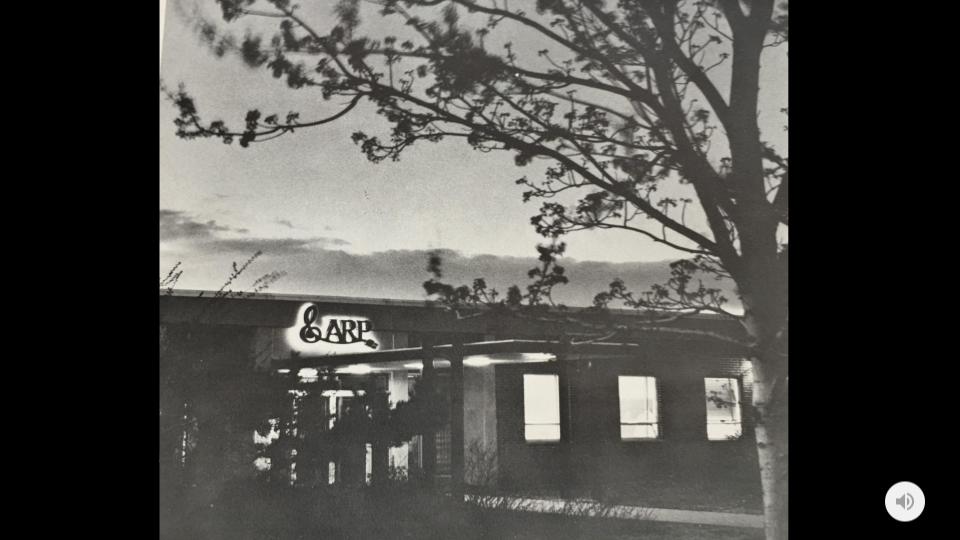
Encouraged by his family and friends, he decided to invest that money into a new venture: Tonus, the company that would later give birth to the legendary ARP Synthesizer. They began in a basement, but soon moved into a proper facility on Kenneth Street. Alan was in charge of ARP Synthesizer along with Phil Dodd’s who was the vice president of the company and also, was in the movie Close Encounters of the Third Kind!
According to Dina, the ARP years were a whirlwind of intense activity. Both Alan and Buena were fully devoted to the company: their days were filled with circuit boards, sliders, and soldering irons. Even family trips often doubled as networking opportunities at trade shows such as NAMM and AES.
One of Alan’s greatest joys was hearing talented musicians bring his instruments to life in ways he could never have imagined.
But, as with any great adventure, it wasn’t all smooth sailing. Those familiar with the world of synthesizer manufacturing know how challenging it can be—and ARP was no exception. In 1981, ARP Instruments was forced to close its doors due to financial difficulties related to the development of the ARP Avatar. Those were hard years for the family, yet Alan remained in high demand and never stopped working. He collaborated with Phil Dodds, founded a computer graphics company called Selva Systems, and worked with RayKurzweil and Mini-Systems, among others.
The Legacy
For a time, the name ARP faded into silence. But in 2004, the ARP world began to reawaken. The first virtual recreations of ARP synthesizers appeared, and in October 2005, Keyboard Magazine honored Alan with a “Keyboard Legend” commemorative plaque.
Since then, the revival of analog sound and the growing passion for vintage instruments have kept his legacy alive. Models like the ARP 2600 and ARP Odyssey have only grown in value and admiration over the years.
Several synthesizer companies—including ours—have recreated these classic designs, striving to preserve and share Alan’s innovative spirit with today’s musicians and those yet to come.
Alan passed away in 2019, leaving behind an immense legacy that we continue to honor every day. He was a remarkable person who, through his passion for music and electricity, created inventions that changed the course of sonic history.
If you ask me, that’s what life is about: following what ignites our hearts and spirits.
Sharing Alan’s life and work is a true privilege. Being part of those who help keep his legacy alive is both a great responsibility and a deep honor.
Our passion for sound and instrument building has brought us to where we are today, and we remain firm believers that doing things with love and enthusiasm will always lead us down the right path.
Thank you, Alan — your legacy is more alive than ever!